Rummy Sequence & Sets: Pure vs Impure Sequence Explained
Sequences and sets are the entire game of rummy — arrange your 13 cards into valid ones and you win; fail and you lose by your unmatched points. The single most important idea is the pure sequence. This guide explains sequences vs sets, pure vs impure, how many you need, and the mistakes that trip up new players — all with clear examples.
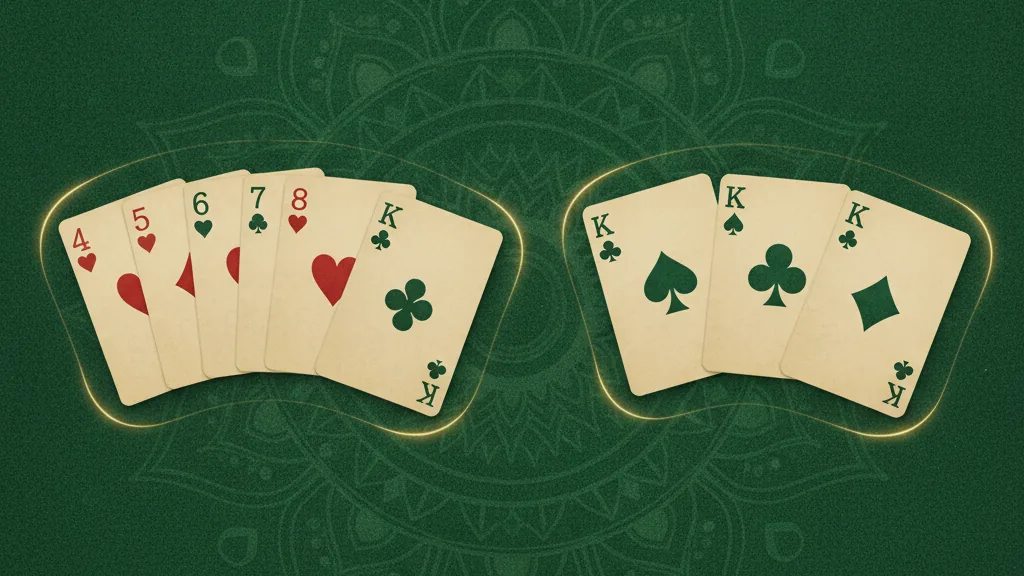
The Two Building Blocks: Sequences and Sets
Every winning rummy hand is made of melds — valid groups of cards. There are two kinds:
- Sequence (run): three or more consecutive cards of the same suit — for example 4♥ 5♥ 6♥.
- Set (group): three or four cards of the same rank but different suits — for example 7♠ 7♥ 7♣.
To make a valid declaration in 13-card rummy you must arrange all your cards into sequences and sets, and crucially, include at least one pure sequence.
Pure Sequence vs Impure Sequence
This is the distinction that decides most hands:
| Type | What it is | Example |
|---|---|---|
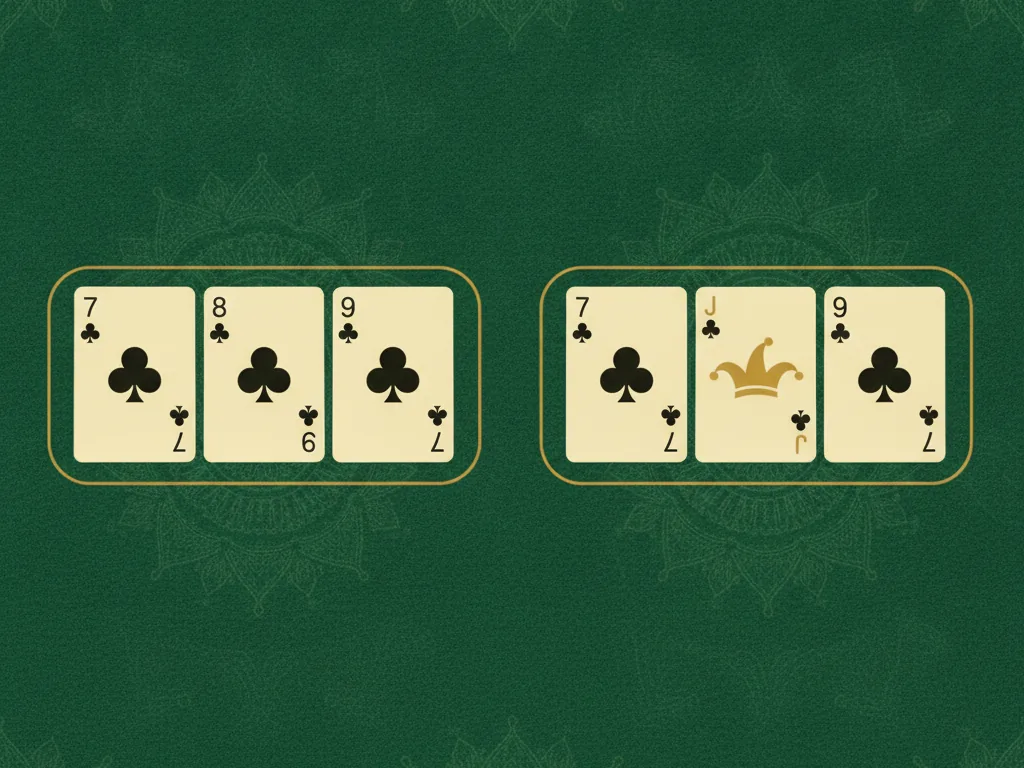
| Pure sequence | A run of same-suit cards with no joker | 5♠ 6♠ 7♠ |
| Impure sequence | A run that uses a joker to fill a gap | 5♠ Joker 7♠ |
How Many Sequences Do You Need?
In standard 13-card Indian rummy you arrange 13 cards into valid melds. A common valid pattern is two sequences (one pure) plus sets that use up the rest of your hand. The exact requirement is simple to remember:
- At least one pure sequence — non-negotiable.
- At least two sequences total (the second can be impure).
- Remaining cards grouped into valid sequences and/or sets.
Sets: the Common Mistakes
- No duplicate suits in a set. 7♠ 7♠ 7♥ is invalid — the two spades clash.
- Maximum four cards (one of each suit). You can't make a five-card set.
- A joker can complete a set, e.g. 9♠ 9♥ Joker, but a set still can't repeat a suit.
Using Jokers Wisely
Jokers are powerful but can't go everywhere. They cannot form part of a pure sequence (that's what makes it "pure"), but they're ideal for completing an impure sequence or a high-value set. For the full rules on printed and wild jokers, see our dedicated rummy rules cheat sheet and the 13-card Indian rummy guide.
Practise sequences & sets for freeDrill pure sequences, impure sequences and sets in our browser rummy game — no signup, no download, no stakes.Play Rummy free →Frequently Asked Questions
What is the difference between a sequence and a set in rummy?
A sequence (run) is three or more consecutive cards of the same suit, such as 4-5-6 of hearts. A set (group) is three or four cards of the same rank in different suits, such as three sevens. A valid hand needs sequences and may include sets, but must contain at least one pure sequence.
What is a pure sequence?
A pure sequence is a run of three or more consecutive cards of the same suit with no joker used. It is mandatory for a valid declaration in 13-card rummy — you cannot declare without one.
How many sequences do you need to win rummy?
You need at least two sequences, and at least one of them must be pure (no joker). The remaining cards are grouped into more sequences or sets. Exact rules can vary slightly by app, so check your table.
Can a joker be used in a pure sequence?
No. By definition a pure sequence contains no joker. Jokers can be used in impure sequences and in sets, but never in the pure sequence that a valid declaration requires.
Can a set have two cards of the same suit?
No. A set is three or four cards of the same rank in different suits. Repeating a suit, such as two spades, makes the set invalid.