How to Play Rummy with 2 Players
A deck of cards and one other person is all you need for a great evening. How to play Rummy with 2 players is one of the easiest things to learn — the rules are the same as the regular game, with just a tweak to the deal. Below you’ll find the full two-player setup, a step-by-step turn, strategy for head-to-head play, and the best card games for two people when you want a change.

How to Play Rummy with 2 Players
The good news: two-player Rummy uses the exact same rules as the regular game. Nothing fundamental changes — the only difference is the deal.
- Cards dealt: 10 cards each (in three- or four-player Rummy you’d deal 7).
- Deck: one standard 52-card deck.
- Setup: the rest forms the face-down stock; flip one card to start the discard pile.
If you’re new to the basics, start with our complete how-to-play Rummy guide — then come back for the two-player specifics.
A two-player turn, step by step
Play alternates between the two of you. On each turn you follow the same four steps in order:
- Draw one card — either the unknown top card of the stock or the visible top card of the discard pile.
- Meld any sets (three or more of the same rank) or runs (three or more of the same suit in sequence) you can lay down.
- Lay off single cards onto melds already on the table — yours or your opponent’s — to shed cards faster.
- Discard one card face-up to end your turn.
The hand ends the moment one player gets rid of every card. The winner scores the value of the cards still in the loser’s hand (face cards 10, aces 1, others face value), and you play more hands up to whatever target you agree on. If the stock runs out before anyone goes out, reshuffle the discard pile to form a new stock and carry on.
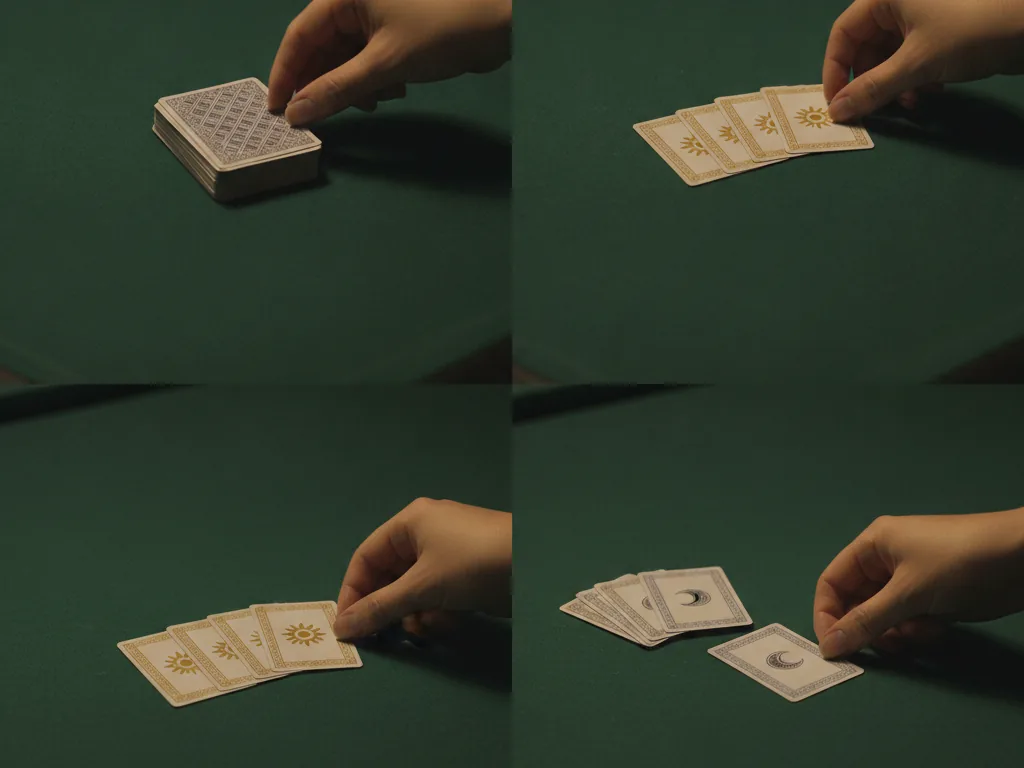
Why two-player Rummy feels different
With only one opponent, the discard pile becomes a conversation. Every card you throw is a card they might grab, and every card they take is a clue to what they’re building. Two-handed Rummy rewards reading your opponent far more than a four-player table does — there’s nowhere to hide.
Two-Player Rummy Strategy
Head-to-head play is all about information. A few habits will win you more hands:
- Watch every discard they take. In a two-player game each pickup is a loud signal — if your opponent grabs a 7, assume they’re working a set of 7s or a run around it, and stop feeding that area.
- Hold back cards your opponent wants. Sometimes it’s worth keeping a "dangerous" discard an extra turn rather than handing over the exact card they need.
- Keep flexible middle cards. Cards like 6, 7 and 8 fit into more runs and pair into more sets, so they keep your options open.
- Dump high cards early. If the hand might end soon, get rid of unmelded face cards before they count against you.
- Meld late if you’re hiding a plan — but not too late. Laying melds down gives your opponent lay-off targets, yet sitting on a full hand risks getting caught when they go out.
Want to add a third player?
Got one more person who wants to join? Rummy itself happily takes three or four — just deal 7 cards each instead of 10. And if you’d rather keep the two-player tension of Gin Rummy with a third at the table, see our guide to Gin Rummy with 3 players, which explains the simple sit-out rotation.
The Best Card Games for Two People
Once you’ve mastered head-to-head Rummy, here are the two-player games worth knowing — all playable with a single standard deck.
1. Gin Rummy — the gold standard
If there’s a "best card game for two," it’s Gin Rummy. Each player gets 10 cards, keeps their melds hidden, and ends the hand with a single knock once their deadwood drops to 10 or less. Fast, tense and deeply strategic. Play it free here.
2. Rummy 500 — for points players
Rummy 500 works beautifully with two (deal 13 each). You score the points inside your melds and can dig into a fanned discard pile. It rewards patience and big plays rather than just going out first.
3. Cribbage — the pegging classic
A 17th-century favourite played to 121 points on a pegging board. You score combinations (fifteens, pairs, runs) during play and in your hand. Not a Rummy game, but a perennial two-player great if you have a board.
4. Casino — capture and build
Players capture face-up table cards by matching or adding to a total. Light, clever, and a nice change of pace from melding games.
5. Speed / Spit — pure reflexes
No turns, no strategy — just two players racing to shed cards onto shared piles as fast as their hands can move. Perfect for a quick, loud five minutes.
How Many Cards? A Quick Two-Player Cheat Sheet
| Game | Cards per player (2P) | Best for |
|---|---|---|
| Basic Rummy | 10 | Easy, family-friendly melding |
| Gin Rummy | 10 | Skill & speed head-to-head |
| Rummy 500 | 13 | Points and patience |
| Cribbage | 6 (then discard 2) | Combinations & pegging |
| Casino | 4 (refilled) | Capturing & building |
Frequently Asked Questions
How many cards do you get in 2-player Rummy?
In basic Rummy, 10 cards each. Rummy 500 deals 13 each to two players, and Gin Rummy deals 10 each.
Can you really play Rummy with just 2 players?
Yes — Rummy plays great head-to-head. The rules are identical; you simply deal 10 cards each. Gin Rummy is a variant designed specifically for two.
What's the best card game for two people?
Gin Rummy is the usual pick for its blend of skill and speed. Rummy 500, Cribbage and Casino are excellent alternatives.
Do you need a special deck?
No. Every game above uses one standard 52-card deck (Cribbage also needs a pegging board to keep score).