Rummy Variants: Points, Pool, Deals & 21-Card Explained
Indian rummy comes in several formats, and they confuse a lot of new players — but the card skill is identical across all of them. What actually changes is how you score and how the match ends. Here's Points, Pool, Deals and 21-card rummy explained simply, so you can pick the one that fits your time and style.
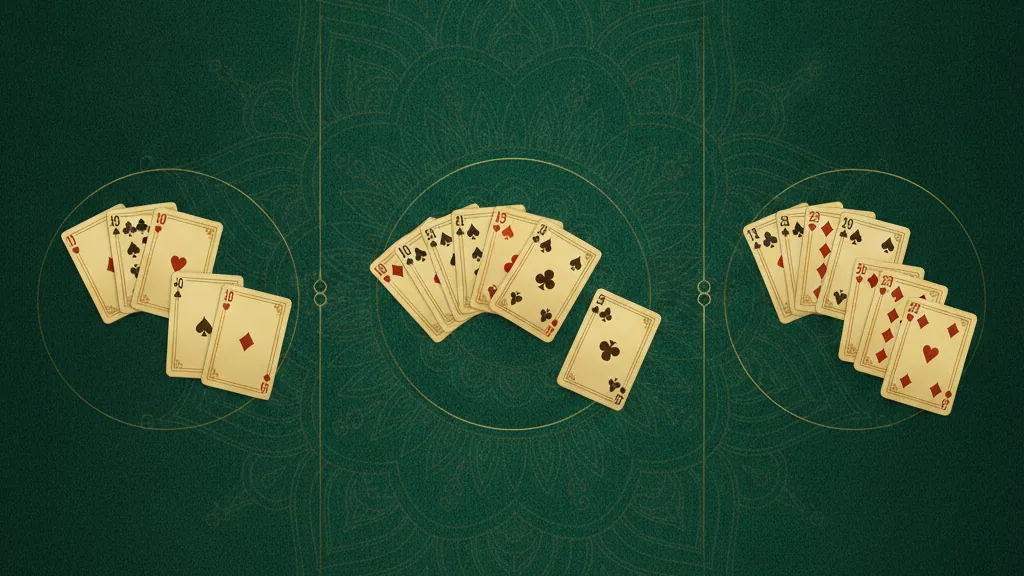
One Game, Several Formats
The core skill — building sequences and sets — is the same across every version of Indian rummy. What changes between formats is how you score and how a match ends. The three you'll meet most are Points, Pool and Deals; 21-card is a bigger cousin.
Points Rummy
The fastest format and the most common online. Each game is a single deal: every point carries a fixed rupee (or chip) value, the winner scores zero, and losers pay according to their unmatched cards. It's quick, decisive and ideal for short sessions. How scoring works →
Pool Rummy
A longer, elimination format played to a points ceiling — usually 101 or 201. You accumulate points across deals, and once you cross the limit you're out. The last player remaining wins the pool. 201 Pool lasts longer and is more forgiving of one bad deal than 101.
Deals Rummy
Played over a fixed number of deals (commonly 2 or 3). Everyone starts each deal with the same number of chips; the winner of each deal takes chips from the others, and whoever holds the most chips at the end wins. Scores are self-contained, so it's predictable in length.
Quick Comparison
| Format | How it ends | Best for |
|---|---|---|
| Points | One deal; rupee value per point | Fast, casual games |
| Pool (101/201) | Cross the points limit and you're out | Longer, knockout-style play |
| Deals | Fixed number of deals; most chips wins | Predictable match length |
| 21-Card | Three-deck game with more cards and jokers | Experienced players wanting depth |
21-Card Rummy (Indian Marriage)
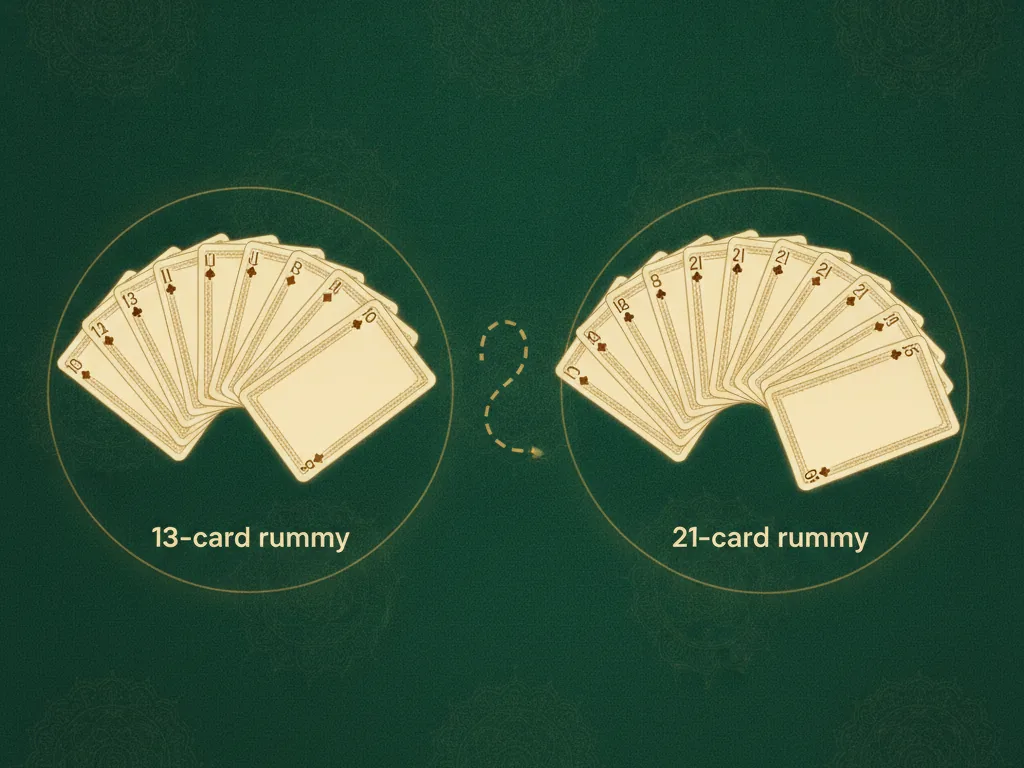
A bigger variant played with three decks, where each player gets 21 cards and must form more sequences, often including special combinations built around jokers (sometimes called tunnelas and dublees). It's richer and slower than 13-card, and best attempted once the standard game feels comfortable. New to the basics? Start with our 13-card Indian rummy rules.
Related Card Games
Beyond Indian rummy, the wider rummy family includes Rummy 500, Gin Rummy and many regional variants we cover in the blog.
Try the formats freePlay Points-style rummy in your browser with no signup, no download and no stakes — the easiest way to feel the difference.Play Rummy free →Frequently Asked Questions
What are the main types of rummy?
The main Indian rummy formats are Points, Pool and Deals, all played with 13 cards, plus 21-card rummy played with three decks. The card skill is the same in each; what changes is how scoring works and how a match ends.
What is the difference between Points, Pool and Deals rummy?
Points rummy is a single deal with a rupee value per point. Pool rummy is played to a points limit (101 or 201) and you are eliminated when you cross it. Deals rummy runs a fixed number of deals and the player with the most chips at the end wins.
What is 21-card rummy?
21-card rummy (sometimes called Indian Marriage) is a larger variant played with three decks where each player gets 21 cards and forms more sequences, often with special joker-based combinations. It is richer and slower than 13-card rummy.
Which rummy format is best for beginners?
Points rummy is the easiest to start with because each game is a single, quick deal. Once the basics feel comfortable, Pool and Deals add structure, and 21-card rummy is best left until you are confident.
Is the card skill different in each format?
No. Forming sequences and sets works the same way in every format. Only the scoring and match structure change, which is what makes one format faster or longer than another.